
Like everyone we started with some simple fermenters and worked our way up to the flag ship, a Brewtools F80 fermenter with all the bells and whistles, and then some.

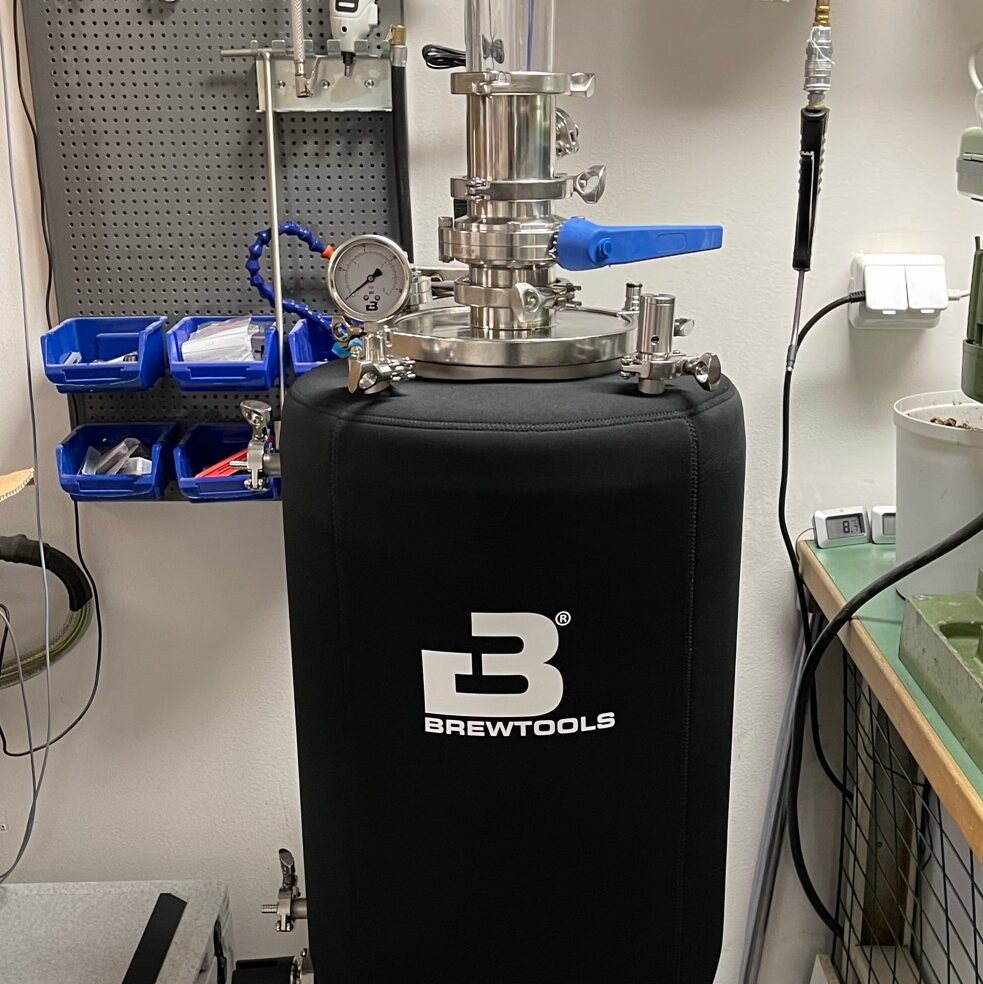


Check out the topics below for details.
More about different parts of the system
-

Cleaning the F80 in place – 3.5 kW inline and a monster of a pump
Cleaning a conical fermenter by hand means a brush on a long stick, a lot of splashing and a lot of guesswork about what you’ve missed. So the F80 gets cleaned in place: a small trolley with a 3.5 kW inline heater and a big pump sends hot cleaner round and round through a spray…
-

Weighing the F80 – volume and gravity from three load cells
A fermenter you can weigh tells you two things. When you fill it, the weight gives you the volume. And once the yeast gets going it gives you the gravity: the CO₂ that leaves through the spunding valve is weight the beer loses, so a scale under the tank can follow the fermentation in real…
-

Heating the F80 from the outside – pads on the cone
Most of the time a fermenter needs cooling, but now and then it needs heat – a yeast that likes it warm, a diacetyl rest at the end of fermentation, or a room that’s colder than the beer should be. Our glycol chiller can only take heat away, so the F80 needs a heater as…
-

Oxygen through a whole fermentation
We left the oxygen probe in the beer for 30 days, from pitching to packaging. The yeast kept it at zero – until it stopped working.
-

Oxygen at the start – watching the yeast take it
We oxygenated a starter and a batch with the oxygen probe in the wort, and watched the yeast take it all within an hour.
-

Purging the dry-hop tower – where the oxygen goes and how much CO₂ it takes
We put the oxygen probe in the dry-hop tower and the CO₂ bottle on a scale, and tried four ways of purging.
-

Swapping silicone for EPDM in our sight glasses
The original silicone gaskets in our sight glasses let in six to seven times more oxygen than EPDM. So we made our own.
-

The gas line lets oxygen in too – tubing, ball locks and connecting
Tubing, valves and ball locks let oxygen into the fermenter too – and a single connection can add as much as a day of steady ingress.
-

How much oxygen gets in? Testing gaskets, valves and sight glasses
We built a small test chamber and measured how much oxygen gets through tri-clamp gaskets, valves and sight glasses – from 2 to 98 µg per hour.
-

How we measure gravity – EasyDens, SmartRef and a centrifuge
To follow a fermentation we measure specific gravity by hand, with an Anton Paar EasyDens density meter and a SmartRef refractometer. The same routine gives us a reference for the Brewtools density meter in our fermenter, and we use it to measure alcohol for a local microbrewery before their beer goes on sale. Here’s how…
-

Bringing Brewtools CAN sensors into Home Assistant
Brewtools’ density meter and agitator are excellent pieces of equipment, but they’re designed to talk to Brewtools’ own system over a private CAN bus. We wanted to use them directly in Home Assistant — so we built a small open-source bridge that does exactly that. The controller is built around an ESP32-C3 microcontroller and a…
-
Cleaning adapter for the sample coil
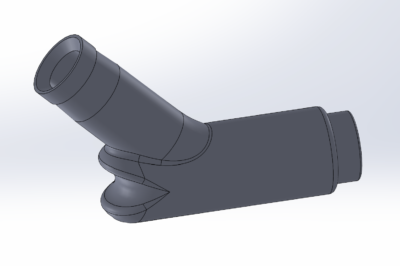
We think that flushing the Brewtools sample coil after taking a sample is kind of messy and designed and printed this little accessory for it. It is printed in Formlabs Surgical Guide SLA resin that is kind of food grade and can handle the temperatures. CAD-files for printing your own adapter (NOTE not for commercial…
-
Electronic spunding valve
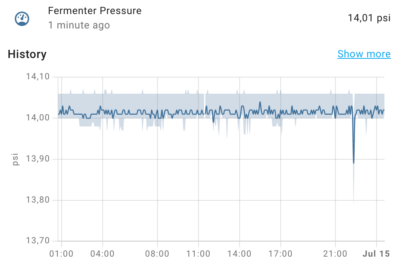
We have thought about building an electronic spunding valve for a while. We have measured pressure accurately and logged it to a db for a long time now but used a manual spunding valve. When planing for a brew we realized that the spunding would fall during a vacation out of town and that triggered…
-
Inline Filter Kit
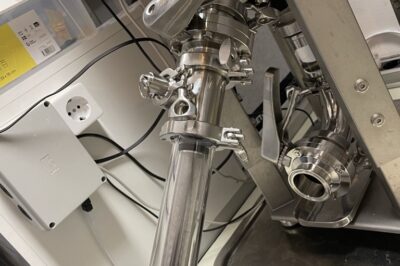
We just had to have one 🙂
-
DIY glycol chiller and fermenter controller
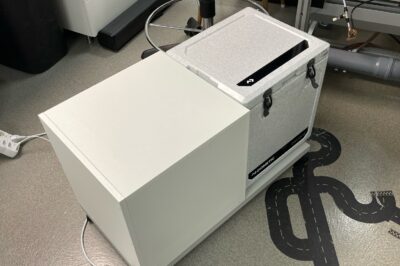
When we invested in a Brewtools F80 fermenter we needed a glycol chiller for it. As usual we decided to make one instead of buying one. The nice thing is that we have total control over the system and we could crank the BTU/h up to 8000 without breaking the bank. Stripping the AC down…
-
Pyrex Erlenmeyer flasks
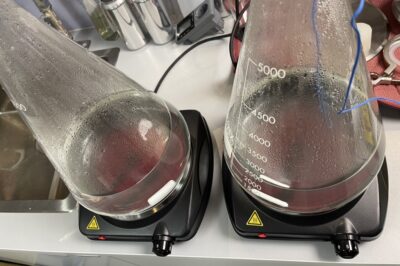
After preparing starters in a kettle and the transfer hot wort to no-name Erlenmeyer flasks and then cool them in an ice bath we started to experiment with boiling DME in the flasks with direct heat (gas) which ended in disaster, we decided to go with some well known Pyrex Erlenmeyer flasks and halogen hobs…
-
Suppressing temperature gradients in the fermenter
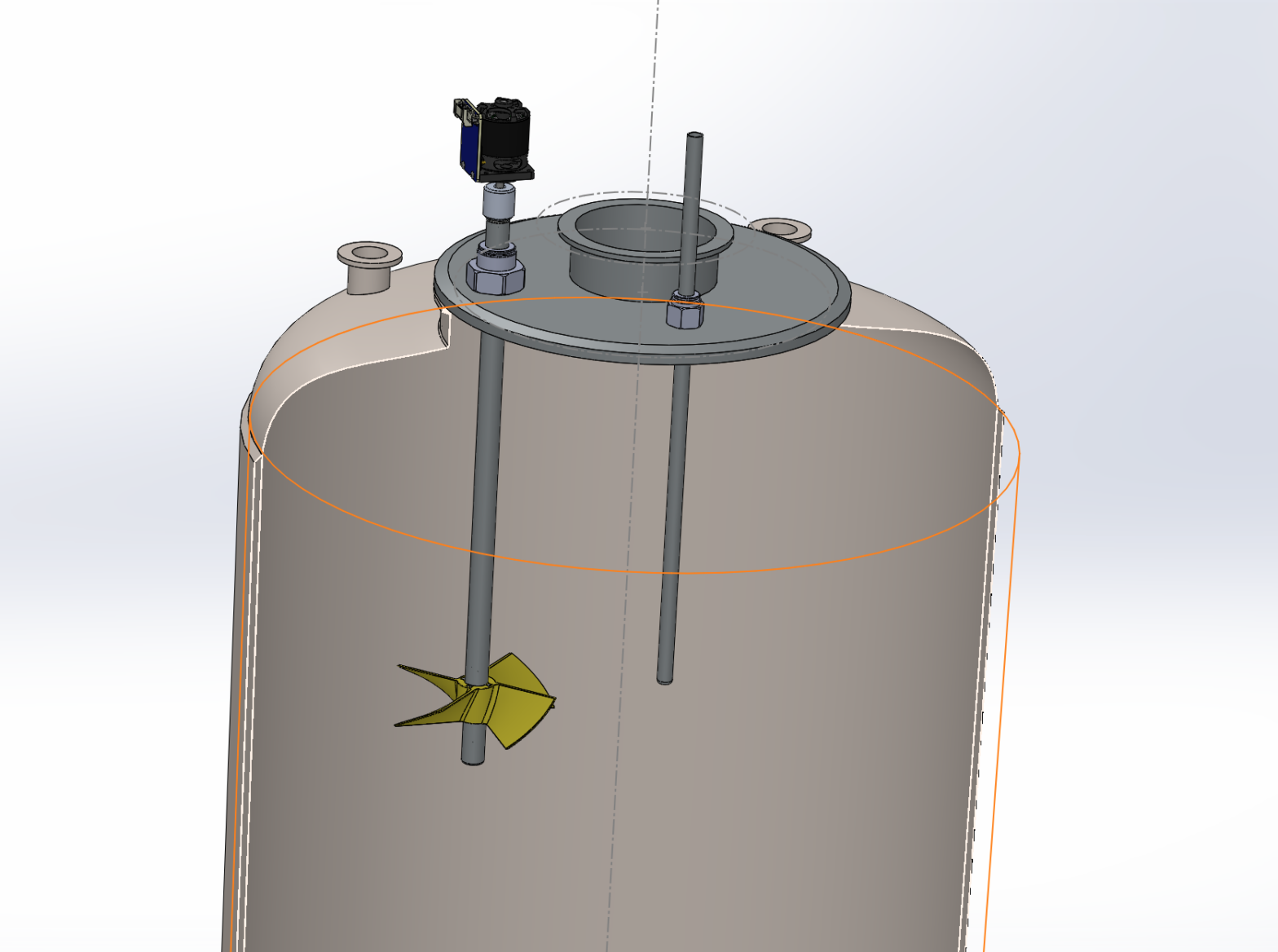
Due to the physical properties of liquids, especially water, there is a great gradient in temperature of the liquid in a partially cooled vessel that is not agitated. This can be seen if you drill a hole in the ice of a lake, you will (probably) find liquid water under the ice. Density of (liquid)…