
When we invested in a Brewtools F80 fermenter we needed a glycol chiller for it. As usual we decided to make one instead of buying one. The nice thing is that we have total control over the system and we could crank the BTU/h up to 8000 without breaking the bank.
Stripping the AC down to the bones
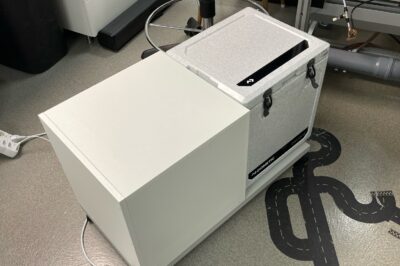
We bought a used AC on internet and started to strip away everything except the compressor, condenser coil, expansion valve and evaporator coil. All the electronics had to go as well and a Raspberry Pi running a custom Python program took its place.


Putting things together
We used 18 mm good quality fibre board shelfs for the casing. Kind of water tight and pretty sturdy.
The insulated box is an Dometic Cool Ice WCI 33, kind of expensive but crazy good insulated!


Firmware
The glycol chiller code is kind of simple, it runs the compressor when the glycol is over a set threshold and stops when the glycol is below the threshold. The condenser fan runs when the compressor is active and continue to run (at different speeds) depending on the compressor housing temperature.
The code for the circulation through the fermenter jacket is another story. We realized that almost 30L of -6C glycol pumped at 1200L/h is to much cooling effect even for 80L of liquid in the fermenter. We experimented a lot with different patterns for the pump and landed in a pulsed pump pattern where the “pump on time” depends on the temperature differens between target and actual mean temperature in the fermenter.
For measuring the temperature in the fermenter we use the standard bottom position AND a top sensor trough a modified lid of the F80.
The firmware advertise itself as an MQTT device and is integrated into Home Assistant (HASS) and the GUI for controlling and monitoring the fermenter is built in HASS.
There is also a ramping funktion built in so we have total control of the temperature ramp of the fermenter.


Things fermenter controller related
-

Weighing the F80 – volume and gravity from three load cells
A fermenter you can weigh tells you two things. When you fill it, the weight gives you the volume. And once the yeast gets going it gives you the gravity: the CO₂ that leaves through the spunding valve is weight the beer loses, so a scale under the tank can follow the fermentation in real…
-

Heating the F80 from the outside – pads on the cone
Most of the time a fermenter needs cooling, but now and then it needs heat – a yeast that likes it warm, a diacetyl rest at the end of fermentation, or a room that’s colder than the beer should be. Our glycol chiller can only take heat away, so the F80 needs a heater as…
-

Bringing Brewtools CAN sensors into Home Assistant
Brewtools’ density meter and agitator are excellent pieces of equipment, but they’re designed to talk to Brewtools’ own system over a private CAN bus. We wanted to use them directly in Home Assistant — so we built a small open-source bridge that does exactly that. The controller is built around an ESP32-C3 microcontroller and a…
-
Electronic spunding valve
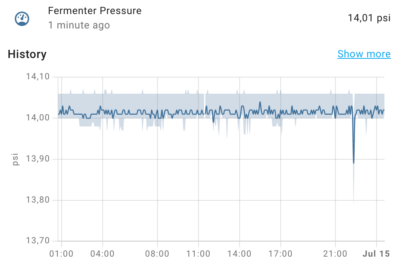
We have thought about building an electronic spunding valve for a while. We have measured pressure accurately and logged it to a db for a long time now but used a manual spunding valve. When planing for a brew we realized that the spunding would fall during a vacation out of town and that triggered…
-
[OLD] Volume sensor for the fermenter (from weight)
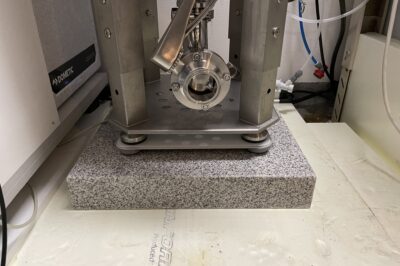
This post describes our first fermenter scale – see Weighing the F80 for the one we use today. The differential pressure based volume sensor is kind of tricky to use and have a lot of “moving parts” so we designed a volume sensor based on the fermenter weight instead. The scale is a standard bathroom…
-
DIY glycol chiller and fermenter controller
When we invested in a Brewtools F80 fermenter we needed a glycol chiller for it. As usual we decided to make one instead of buying one. The nice thing is that we have total control over the system and we could crank the BTU/h up to 8000 without breaking the bank. Stripping the AC down…
-
Suppressing temperature gradients in the fermenter
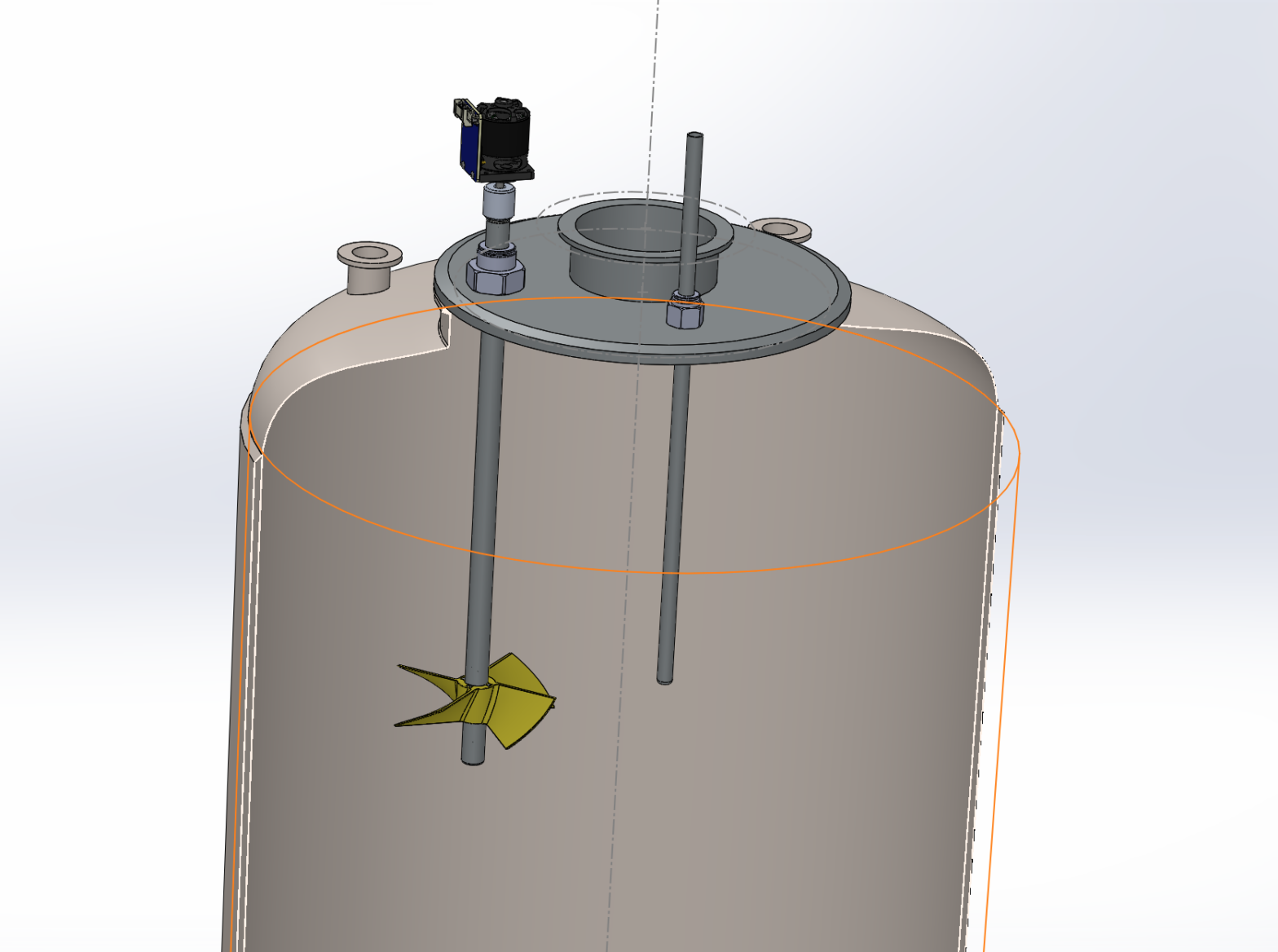
Due to the physical properties of liquids, especially water, there is a great gradient in temperature of the liquid in a partially cooled vessel that is not agitated. This can be seen if you drill a hole in the ice of a lake, you will (probably) find liquid water under the ice. Density of (liquid)…
