
Fermenter
-

Bringing Brewtools CAN sensors into Home Assistant
Brewtools’ density meter and agitator are excellent pieces of equipment, but they’re designed to talk to Brewtools’ own system over a private CAN bus. We wanted to use them directly in Home Assistant — so we built a small open-source bridge that does exactly that. The controller is built around an ESP32-C3 microcontroller and a…
-
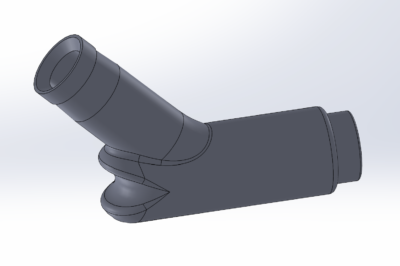
Cleaning adapter for the sample coil
We think that flushing the Brewtools sample coil after taking a sample is kind of messy and designed and printed this little accessory for it. It is printed in Formlabs Surgical Guide SLA resin that is kind of food grade and can handle the temperatures. CAD-files for printing your own adapter (NOTE not for commercial…
-

Volume sensor for the fermenter (from xxx)
Pending an NDA (non disclosure aggrement) with yyy.. can’t say more right now 😉
-
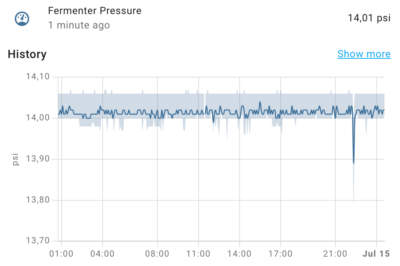
Electronic spunding valve
We have thought about building an electronic spunding valve for a while. We have measured pressure accurately and logged it to a db for a long time now but used a manual spunding valve. When planing for a brew we realized that the spunding would fall during a vacation out of town and that triggered…
-
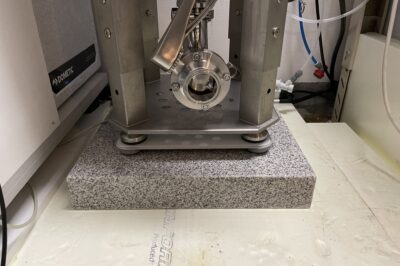
Volume sensor for the fermenter (from weight)
The differential pressure based volume sensor is kind of tricky to use and have a lot of “moving parts” so we designed a volume sensor based on the fermenter weight instead. The scale is a standard bathroom scale capable of 180 kg that is stripped of all electronics except for the 4 pressure sensors that…
-
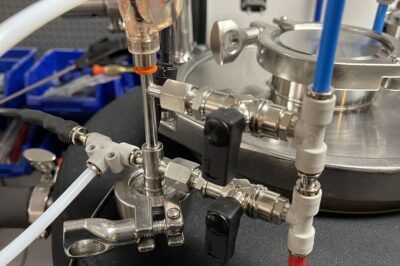
Volume sensor for the fermenter (from differential pressure)
Knowing the “exact” wort volume in a fermenter is “crucial” for quality control during the brewing process. However, measuring the volume accurately and continuously can be a challenge. At our brewery, we use differential pressure sensors for various measurement tasks, and we realized that this technology could also be used to estimate the wort volume…
-
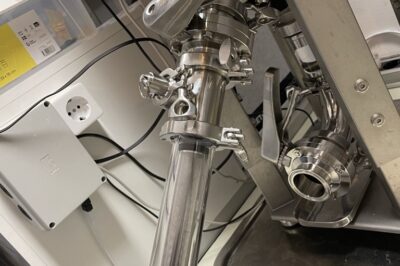
Inline Filter Kit
We just had to have one 🙂
-
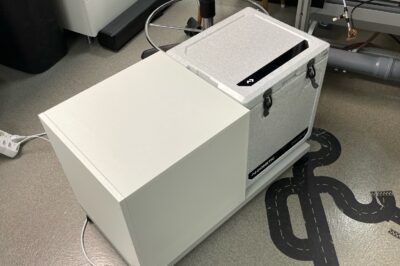
DIY glycol chiller and fermenter controller
When we invested in a Brewtools F80 fermenter we needed a glycol chiller for it. As usual we decided to make one instead of buying one. The nice thing is that we have total control over the system and we could crank the BTU/h up to 8000 without breaking the bank. Stripping the AC down…
-
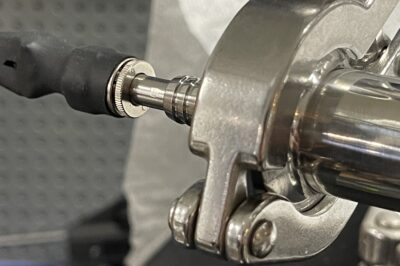
Digital pressure sensor for the fermenter
Everything we do is connected 🙂 The pressure sensor of the fermenter is no exception. We used the same typ of sensor as for the Venturi pipe and suction sensor but with a greater range (6 bar) and not differential.It is read from the fermenter controller, i.e., the RPi controlling the glycol chiller and other…
-
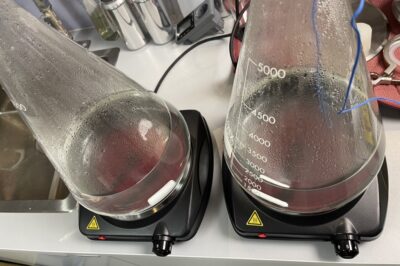
Pyrex Erlenmeyer flasks
After preparing starters in a kettle and the transfer hot wort to no-name Erlenmeyer flasks and then cool them in an ice bath we started to experiment with boiling DME in the flasks with direct heat (gas) which ended in disaster, we decided to go with some well known Pyrex Erlenmeyer flasks and halogen hobs…
-
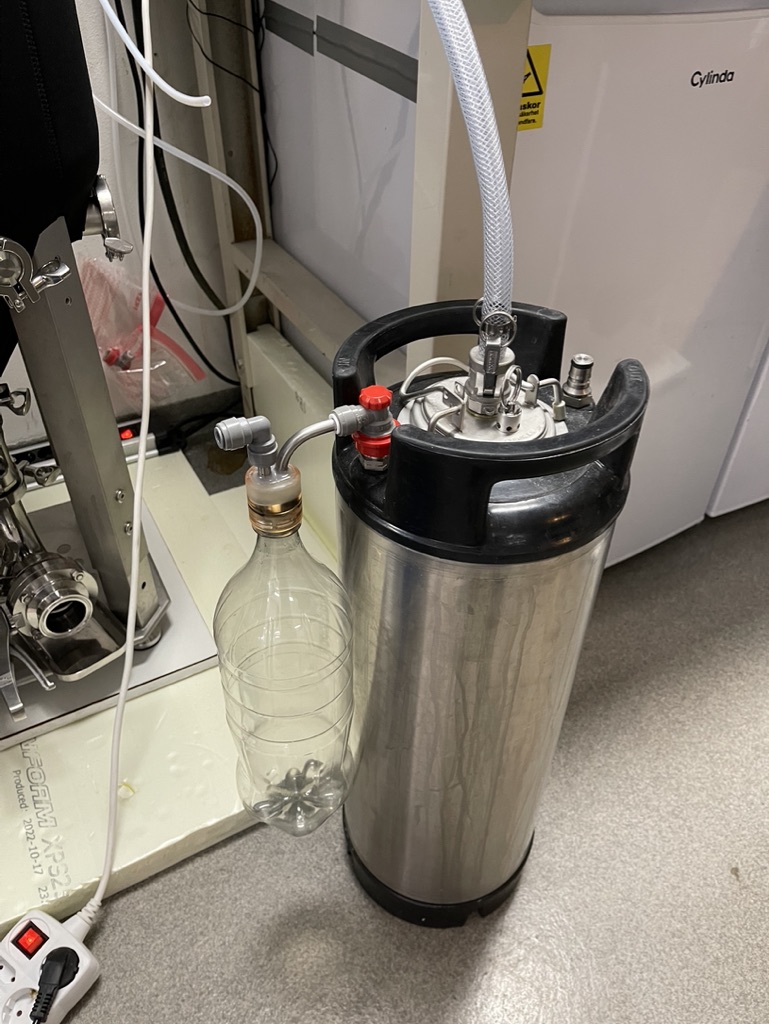
Krausen buffer
After a few mishaps with krausen finding its way up the hose to our spunding valve (with our former fermenter), this “krausen buffer” was designed to give a little more head room.The extra PET bottle is another layer of security in terms of volume, but not least so that we can see if the Cornelius…
-
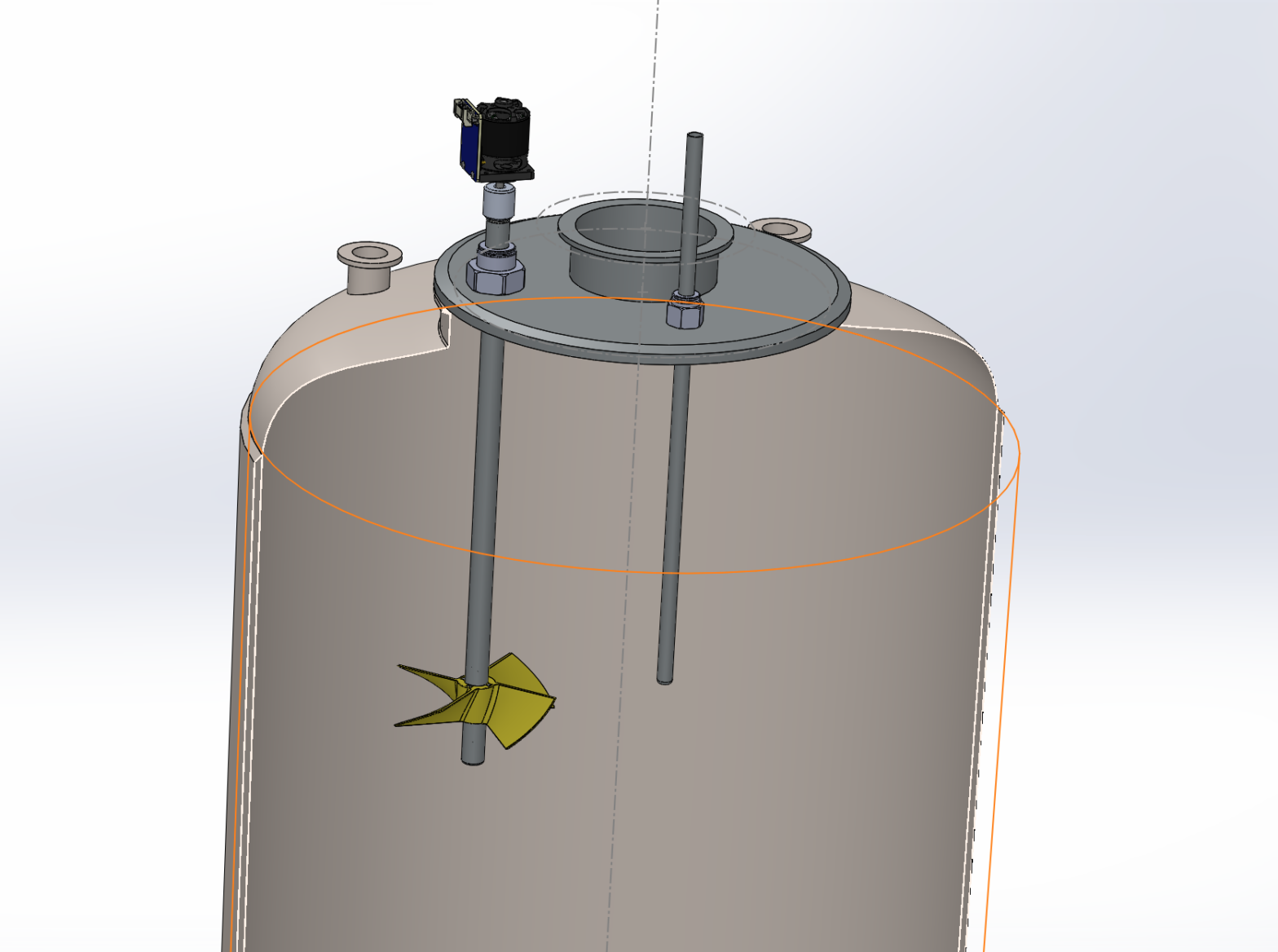
Suppressing temperature gradients in the fermenter
Due to the physical properties of liquids, especially water, there is a great gradient in temperature of the liquid in a partially cooled vessel that is not agitated. This can be seen if you drill a hole in the ice of a lake, you will (probably) find liquid water under the ice. Density of (liquid)…